
Is the "Brotherhood in Uniform" Above the Rule of Law?
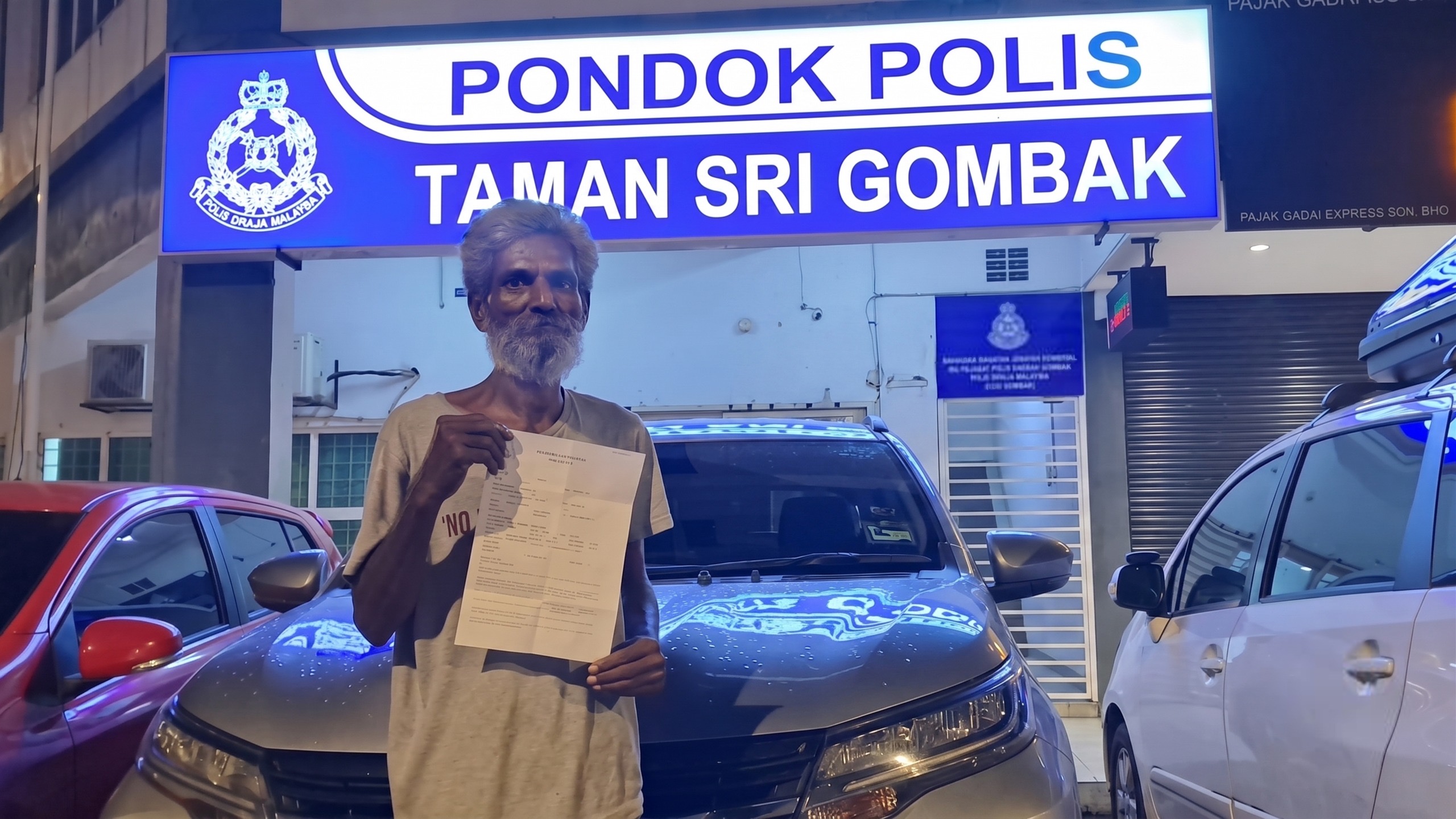
LOOK AT THIS MAN.
He is the face of Malaysia's forgotten poor.
A frail, weathered Indian father whose life has been etched by decades of hardship. Looking at him, I would have guessed he was about 65 years old.
He is only 53.
Poverty has aged him far beyond his years.
Now he carries a burden no parent should ever have to bear.
His 26-year-old son, Vineswaran, was arrested on suspicion of drug use. After a urine test allegedly returned positive, he was remanded on 3 May 2026 because his family could not raise the RM3,000 bail. He was subsequently sent to prison in Kuala Kubu Bharu.
On 20 July, at about 2.34 p.m., this father received a telephone call from the prison informing him that his son was in critical condition in hospital.
Just four minutes later, another call came.
A woman identifying herself as a doctor informed him that his son had died.
Four minutes is all the time that separated "critical condition" from "your son is dead."
How does a 26-year-old youth, who was healthy when he entered custody, leave prison in a body bag?
Every custodial death demands answers. Every unexplained death in State custody demands independent scrutiny. Yet case after case reveals a recurring pattern of custodial deaths that those in power have failed, or refused to confront
For years, I have spoken about custodial deaths involving members of the Indian community. The statistics and recurring cases deserve serious national attention. This is not an attempt to inflame racial or religious sentiments.
Yet Prime Minister Anwar Ibrahim has publicly suggested that I allege Hindus are being murdered in police custody.
That is a complete distortion of what I have consistently said.
This is not about race. It is not about religion. It is about a system deeply entrenched by a "brotherhood in uniform"—a culture of silence, mutual protection and institutional self-preservation that, in my opinion, has become one of the greatest obstacles to justice. Honest officers become prisoners of the system, while those who abuse power find comfort in the knowledge that the institution will close ranks around them.
History has shown us too many troubling incidents that raise serious questions.
Not long ago a senior Finance Ministry legal officer was found dead in his office, legs and neck bound using cable tiesthat points to murder in the office of the Finance ministry- an office guarded 24 hours with CCTV. The murder evaporated into thin air.
A woman travelling to the MACC headquarters to provide a statement in an investigation involving her husband disappeared after being forced out of her e-hailing vehicle by men in police uniform and vests. To this day, her disappearance remains one of the country's most disturbing unresolved cases.
More than a decade ago, I attended the inquest of a 22-year-old orphan together with my fellow lawyer, Karthigesan. The young man had been sentenced to six years' imprisonment for stealing sardine tins and packets of rice. Two years into serving his sentence, he was found dead- hanging in prisoncell. Despite the inquest finding elements of murder, no follow up investigations were done.
These are not isolated tragedies. They reveal a deeply entrenched "brotherhood in uniform", sustained by a culture in which elements within the enforcement agencies and the political establishment appear more willing to protect one another than to expose wrongdoing. This in turn breeds impunity, perpetuates cover-ups, silences accountability, and transforms public institutions from guardians of justice into guardians of one another.
Too many of us remain comfortable because these tragedies have not entered our own homes. We convince ourselves that someone else's suffering is someone else's problem.
Until one day, it becomes ours.
A democracy cannot remain healthy when its institutions are perceived to close ranks around wrongdoing—protecting one another instead of protecting the Constitution, the rule of law, and the people they are sworn to serve.
Will the death of Vineswaran be another file closed and forgotten.
Waytha Moorthy Ponnusamy