
A Direct Challenge to Constitutional Supremacy and Representative Democracy?
The Constitution of the State of Melaka (Amendment) Enactment 2026, passed on 14th July 2026, which sanctioned the appointment of members to the Melaka State Legislative Assembly, raises a fundamental constitutional question that goes to the very foundation of our constitutional democracy.
The issue before the nation is a simple one.
Can a State Legislature amend its Constitution to introduce appointed Assemblymen when:
FEDERAL CONSTITUTION MANDATES THAT MEMBERS OF A STATE LEGISLATIVE ASSEMBLY SHALL BE ELECTED?
The answer is NO.
The amendment is inconsistent with the Federal Constitution, violates the mandatory framework governing State Constitutions, and undermines representative democracy, which is a fundamental part of the Federal Constitution.
I.THE FEDERAL CONSTITUTION IS THE SUPREME LAW
Article 4(1) of the Federal Constitution provides:
"This Constitution is the supreme law of the Federation and any law passed after Merdeka Day which is inconsistent with this Constitution shall, to the extent of the inconsistency, be void."
All laws enacted in Malaysia must conform to the Federal Constitution.
The State of Melaka derives its constitutional existence as one of the constituent States of the Federation from Article 1(2) of the Federal Constitution.
The Constitution of the State of Melaka derives its constitutional authority from Article 71, read together with Part I of the Eighth Schedule to the Federal Constitution, which prescribes the essential constitutional framework that every State Constitution must adopt.
Therefore, a State Constitution is subordinate to the Federal Constitution.
A State Legislature cannot, through constitutional amendment, expand its powers beyond those conferred by the Federal Constitution, as occurred in the recent Melaka amendments.
Article 71 and the Eighth Schedule do not empower a State Legislature to deviate from the mandatory provisions prescribed for State Constitutions, nor to override the clear intention of the framers of the Federal Constitution.
II. THE EIGHTH SCHEDULE MANDATES AN ELECTED LEGISLATURE
The key constitutional provision is found in Section 4(1) of the Eighth Schedule.
It provides:
"The Legislative Assembly shall consist of such number of electedmembers as the Legislature may by law provide."
Accordingly, this requirement has been incorporated in the Melaka State Constitution since Merdeka under Article 11 of the Melaka State Constitution.
Every word in this provision is significant.
The operative word is "shall."
This is mandatory.
More importantly, the Constitution confers only one legislative discretion upon the State Legislature.
It may determine only the number of elected members.
This is the only constitutional power granted.
Where the Federal Constitution expressly specifies the category of members that may comprise a Legislative Assembly, a State Legislature possesses no constitutional authority to create an entirely new category of appointed legislators.
The intention of the constitutional framers is unmistakable.
Legislative authority at the State level must originate from the electorate, not from executive appointment.
III. THE FEDERAL CONSTITUTION ITSELF DEMONSTRATES THAT APPOINTMENTS ARE PERMITTED ONLY WHERE EXPRESSLY AUTHORISED
The Federal Constitution is an integrated code whose provisions must be read harmoniously.
Whenever the framers intended legislative membership to arise by appointment rather than election, they said so expressly.
For example:
Article 45 expressly authorises the appointment of Senators to the Dewan Negara.
Likewise, the Eighth Schedule expressly allows the appointment of a Speaker to the state Legislative Assembly who is not an elected member.
However, even in that exceptional situation, the Constitution expressly provides that:
This constitutional exception is highly significant. It demonstrates two important principles.
First, the framers clearly recognised the distinction between elected and appointed legislators.
Second, whenever they intended an exception to the principle of election, they expressly provided for it.
No similar provision exists permitting appointed State Assemblymen.
This omission is deliberate, not accidental.
Applying the well-established principle of constitutional interpretation—expressio unius est exclusio alterius—the express authorisation of appointed Senators and a non-voting State Speaker necessarily excludes the creation of appointed Assemblymen by implication.
CONCLUSION
The issue before us concerns the supremacy of the Federal Constitution and the preservation of representative democracy as envisaged by the framers of our Constitution.
It has been suggested that Pahang and Johor previously amended their State Constitutions to provide for appointed members of their Legislative Assemblies, and that Melaka is following this model.
However, this argument does not determine the constitutional validity of the Melaka amendment.
Simply put, two wrongs do not make a right.
The Eighth Schedule circumscribes the constitutional amending power of a State Legislature and cannot be exercised in a manner that is inconsistent with its mandatory constitutional requirements.
The withdrawal of the Pakatan Harapan Assemblymen from the Melaka State Government was undoubtedly a strong political statement. However, political protest alone is insufficient to safeguard the Constitution.
While the opposition opposed the amendment on grounds of democratic principle and the people's electoral mandate, the issues raised extend beyond politics into the realm of constitutional law. It ought now to proceed to the constitutional forum. As there is a genuine question as to whether the Constitution of the State of Melaka (Amendment) Enactment 2026 is consistent with the Federal Constitution, that question should be referred to the Federal Court, preferably by way of a direct constitutional reference, for an authoritative determination.
Waytha Moorthy Ponnusamy
President
Malaysian Advancement Party
26th July 2026
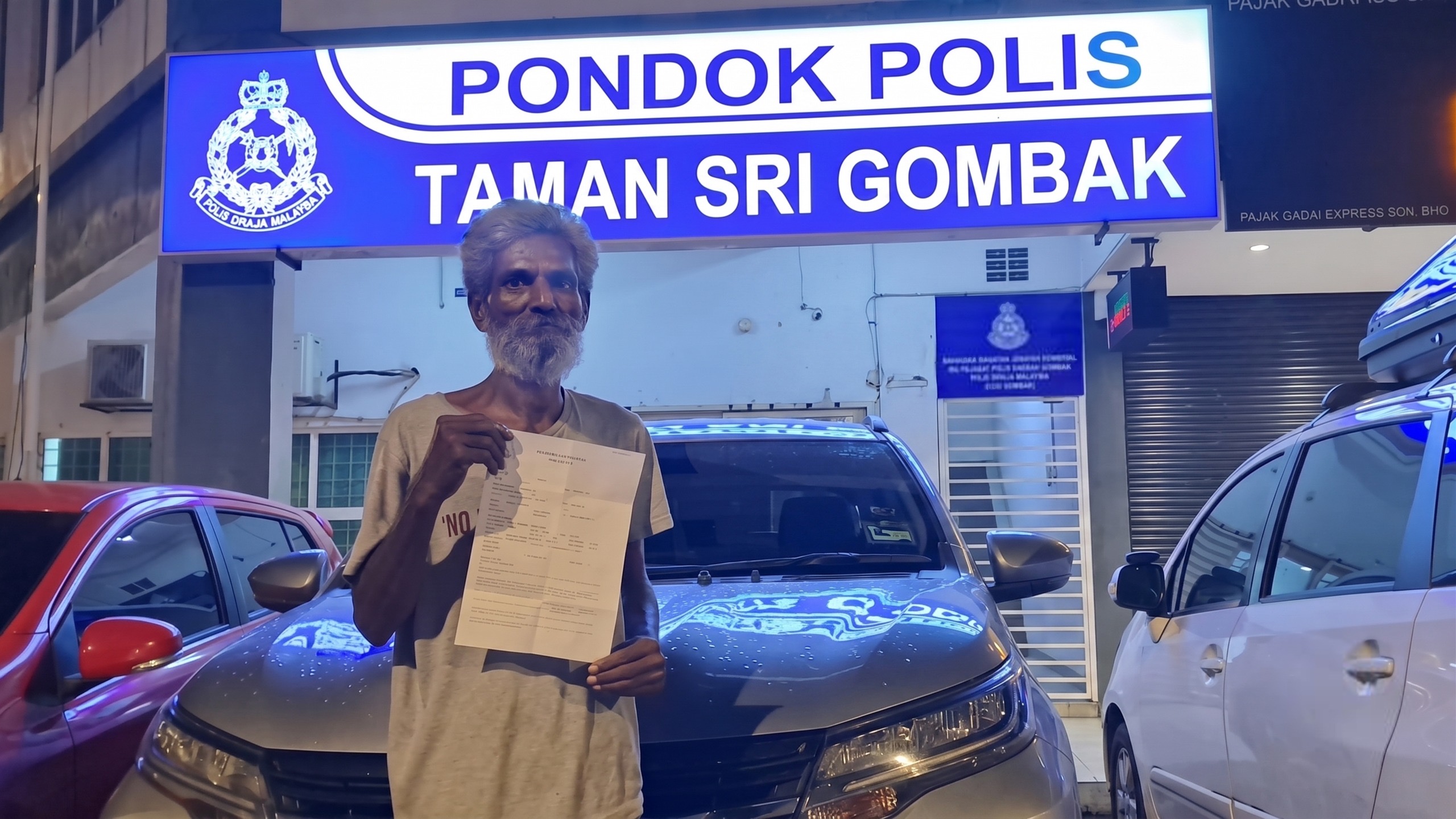
LOOK AT THIS MAN.
He is the face of Malaysia's forgotten poor.
A frail, weathered Indian father whose life has been etched by decades of hardship. Looking at him, I would have guessed he was about 65 years old.
He is only 53.
Poverty has aged him far beyond his years.
Now he carries a burden no parent should ever have to bear.
His 26-year-old son, Vineswaran, was arrested on suspicion of drug use. After a urine test allegedly returned positive, he was remanded on 3 May 2026 because his family could not raise the RM3,000 bail. He was subsequently sent to prison in Kuala Kubu Bharu.
On 20 July, at about 2.34 p.m., this father received a telephone call from the prison informing him that his son was in critical condition in hospital.
Just four minutes later, another call came.
A woman identifying herself as a doctor informed him that his son had died.
Four minutes is all the time that separated "critical condition" from "your son is dead."
How does a 26-year-old youth, who was healthy when he entered custody, leave prison in a body bag?
Every custodial death demands answers. Every unexplained death in State custody demands independent scrutiny. Yet case after case reveals a recurring pattern of custodial deaths that those in power have failed, or refused to confront
For years, I have spoken about custodial deaths involving members of the Indian community. The statistics and recurring cases deserve serious national attention. This is not an attempt to inflame racial or religious sentiments.
Yet Prime Minister Anwar Ibrahim has publicly suggested that I allege Hindus are being murdered in police custody.
That is a complete distortion of what I have consistently said.
This is not about race. It is not about religion. It is about a system deeply entrenched by a "brotherhood in uniform"—a culture of silence, mutual protection and institutional self-preservation that, in my opinion, has become one of the greatest obstacles to justice. Honest officers become prisoners of the system, while those who abuse power find comfort in the knowledge that the institution will close ranks around them.
History has shown us too many troubling incidents that raise serious questions.
Not long ago a senior Finance Ministry legal officer was found dead in his office, legs and neck bound using cable tiesthat points to murder in the office of the Finance ministry- an office guarded 24 hours with CCTV. The murder evaporated into thin air.
A woman travelling to the MACC headquarters to provide a statement in an investigation involving her husband disappeared after being forced out of her e-hailing vehicle by men in police uniform and vests. To this day, her disappearance remains one of the country's most disturbing unresolved cases.
More than a decade ago, I attended the inquest of a 22-year-old orphan together with my fellow lawyer, Karthigesan. The young man had been sentenced to six years' imprisonment for stealing sardine tins and packets of rice. Two years into serving his sentence, he was found dead- hanging in prisoncell. Despite the inquest finding elements of murder, no follow up investigations were done.
These are not isolated tragedies. They reveal a deeply entrenched "brotherhood in uniform", sustained by a culture in which elements within the enforcement agencies and the political establishment appear more willing to protect one another than to expose wrongdoing. This in turn breeds impunity, perpetuates cover-ups, silences accountability, and transforms public institutions from guardians of justice into guardians of one another.
Too many of us remain comfortable because these tragedies have not entered our own homes. We convince ourselves that someone else's suffering is someone else's problem.
Until one day, it becomes ours.
A democracy cannot remain healthy when its institutions are perceived to close ranks around wrongdoing—protecting one another instead of protecting the Constitution, the rule of law, and the people they are sworn to serve.
Will the death of Vineswaran be another file closed and forgotten.
Waytha Moorthy Ponnusamy
LIHATLAH LELAKI INI.
Beliau adalah wajah golongan miskin Malaysia yang telah lama dilupakan.
Seorang bapa India yang uzur dan dimamah usia sebelum waktunya. Kehidupannya dipahat dengan puluhan tahun penderitaan dan kemiskinan. Melihat wajahnya, saya menyangka umurnya sekitar 65 tahun.
Hakikatnya, beliau baru berusia 53 tahun.
Kemiskinan telah meragut usia mudanya jauh lebih awal.
Kini beliau memikul beban yang tidak sepatutnya ditanggung oleh mana-mana ibu atau bapa.
Anaknya yang berusia 26 tahun, Vineswaran, ditahan atas syak menggunakan dadah. Selepas ujian air kencing didakwa didapati positif, beliau direman pada 3 Mei 2026 kerana keluarganya tidak mampu menyediakan wang jaminan sebanyak RM3,000. Beliau kemudiannya dihantar ke Penjara Kuala Kubu Bharu.
Pada 20 Julai, kira-kira jam 2.34 petang, bapa ini menerima panggilan telefon daripada pihak penjara yang memaklumkan bahawa anaknya berada dalam keadaan kritikal di hospital.
Hanya empat minit kemudian, satu lagi panggilan diterima.
Seorang wanita yang memperkenalkan dirinya sebagai doktor memaklumkan bahawa anaknya telah meninggal dunia.
Empat minit.
Itulah tempoh yang memisahkan antara "keadaan kritikal" dengan "anak tuan telah meninggal dunia."
Bagaimanakah seorang pemuda berusia 26 tahun, yang sihat ketika memasuki tahanan, akhirnya keluar dari penjara di dalam beg mayat?
Setiap kematian dalam tahanan menuntut jawapan. Setiap kematian yang tidak dapat dijelaskan ketika seseorang berada dalam jagaan negara menuntut siasatan bebas dan menyeluruh. Namun, satu demi satu kes memperlihatkan pola kematian dalam tahanan yang berulang, yang gagal — atau enggan — ditangani oleh mereka yang berkuasa.
Selama bertahun-tahun saya telah membangkitkan isu kematian dalam tahanan yang melibatkan masyarakat India. Statistik dan kes-kes yang berulang ini sepatutnya mendapat perhatian serius di peringkat nasional. Ini bukan usaha untuk meniupkan sentimen perkauman atau keagamaan.
Namun Perdana Menteri, Anwar Ibrahim, secara terbuka mendakwa bahawa saya menuduh penganut Hindu dibunuh dalam tahanan polis.
Itu adalah satu pemutarbelitan yang sama sekali menyimpang daripada apa yang saya nyatakan secara konsisten selama ini.
Ini bukan soal kaum.
Ini bukan soal agama.
Ini adalah soal satu sistem yang telah berakar umbi dengan "persaudaraan berseragam" (brotherhood in uniform) — satu budaya membisu, saling melindungi dan mempertahankan institusi sehingga, pada pandangan saya, ia telah menjadi antara penghalang terbesar kepada keadilan. Pegawai-pegawai yang jujur akhirnya menjadi tawanan kepada sistem, manakala mereka yang menyalahgunakan kuasa berasa selesa kerana mengetahui institusi akan berpakat demi melindungi mereka.
Sejarah telah memperlihatkan terlalu banyak insiden yang membangkitkan persoalan serius.
Tidak lama dahulu, seorang pegawai kanan undang-undang di Kementerian Kewangan ditemui mati di pejabatnya dengan leher dan kaki diikat serta kesan kecederaan yang menunjukkan unsur pembunuhan, di dalam sebuah bangunan kerajaan yang dikawal keselamatan 24 jam dan dipantau CCTV sepanjang masa. Namun, pembunuhan itu seolah-olah lenyap begitu sahaja tanpa jawapan.
Seorang wanita yang dalam perjalanan ke ibu pejabat SPRM untuk memberikan keterangan berhubung siasatan melibatkan suaminya pula hilang selepas dipaksa keluar daripada kenderaan e-hailing yang dinaikinya oleh beberapa individu yang memakai pakaian seragam dan vest polis. Sehingga hari ini, kehilangannya kekal sebagai antara misteri paling menggemparkan negara yang masih belum terungkai.
Lebih sedekad lalu, saya menghadiri inkues seorang anak yatim berusia 22 tahun bersama rakan peguam saya, Karthigesan. Pemuda itu dijatuhi hukuman penjara enam tahun kerana mencuri beberapa tin sardin dan bungkusan beras. Dua tahun selepas menjalani hukuman, beliau ditemui mati tergantung di dalam sel penjara. Walaupun inkues tersebut menemukan unsur-unsur pembunuhan, tiada siasatan susulan yang bermakna pernah dijalankan.
Ini bukan tragedi yang terpencil.
Kes-kes ini mendedahkan kewujudan "persaudaraan berseragam" yang telah berakar umbi, disokong oleh satu budaya di mana unsur-unsur tertentu dalam agensi penguatkuasaan dan kelompok politik dilihat lebih cenderung melindungi sesama sendiri daripada mendedahkan salah laku. Budaya inilah yang akhirnya melahirkan budaya kebal daripada tindakan undang-undang, mengekalkan amalan menutup kesalahan, membisukan akauntabiliti, dan mengubah institusi awam daripada penjaga keadilan kepada penjaga sesama sendiri.
Terlalu ramai daripada kita terus hidup dalam zon selesa kerana tragedi seperti ini belum mengetuk pintu rumah kita sendiri. Kita meyakinkan diri bahawa penderitaan orang lain bukan urusan kita.
Sehinggalah suatu hari nanti...
ia menjadi penderitaan kita sendiri.
Sesebuah demokrasi tidak akan dapat kekal sihat apabila institusi-institusinya dilihat berpakat melindungi salah laku, bukannya menegakkan Perlembagaan, kedaulatan undang-undang dan hak rakyat.
Adakah kematian Vineswaran akan menjadi satu lagi fail yang ditutup dan dilupakan?
Waytha Moorthy Ponnusamy
More Articles …
Page 7 of 33